
You’ve landed a client overseas – congratulations! Now comes the crucial step: getting paid. Invoicing international clients from Nigeria can seem daunting with currency conversions, payment gateways, and local regulations to consider.
But don’t worry, it doesn’t have to be. With the right tools and knowledge, you can invoice like a pro and receive payments smoothly.
To invoice international clients from Nigeria, include clear payment terms (currency, due date), itemized services, your company details, and accepted payment methods (e.g., bank transfer, PayPal, or payment links). Invoicing software like Cordlo simplifies this process, offering professional templates and automated payment reminders.
Understanding the Challenges
Many Nigerian freelancers and businesses face similar hurdles:
- Currency Conversion: Deciding whether to bill in Naira, USD, or another currency.
- Payment Gateways: Choosing reliable platforms that work in Nigeria.
- Regulations: Staying compliant with Nigerian tax laws (FIRS) and CBN policies.
- Fees and Charges: Minimizing transaction costs to maximize your earnings.
Amara, a freelance graphic designer in Lagos, often bills her US clients in USD to avoid currency fluctuations. However, she needs a reliable way to convert those dollars to Naira at a good rate.
Choosing the Right Currency
The currency you choose affects your profitability and client relationships.
- Naira (₦): Simplifies accounting for your Nigerian business but exposes you to currency fluctuations.
- US Dollar (USD): Preferred by many international clients and offers stability, but requires a domiciliary account.
- Other Currencies (EUR, GBP): Consider if you have significant expenses in those currencies.
For instance, Chidi runs a catering business in Abuja and regularly works with event planners from the UK. He bills them in GBP to match his supplier costs in the UK.
When deciding, consider your expenses, client preferences, and currency stability.
Creating a Professional Invoice
A well-structured invoice builds trust and ensures prompt payment.
- Company Information: Include your business name, address, email, and phone number. If CAC registered, include your registration number.
- Client Information: Add your client’s name, address, and contact details.
- Invoice Number: Use a unique invoice number for easy tracking (e.g., INV-2024-001).
- Date: Include the invoice date and payment due date.
- Description of Services: Itemize each service with clear descriptions and rates.
- Total Amount: Clearly state the total amount due, including any taxes or discounts.
- Payment Terms: Specify accepted payment methods and late payment penalties.
Consider using invoicing software like Cordlo to automate this process and ensure accuracy.
Payment Gateways for International Transactions
Choosing the right payment gateway is crucial for receiving payments from international clients.
- Paystack: Popular in Nigeria, supports international payments with extra fees.
- Flutterwave: Another strong option for Nigerian businesses, offering multi-currency support.
- PayPal: Widely used globally, but can have higher fees and currency conversion charges.
- Stripe: Not directly available in Nigeria, but can be accessed through partnerships or foreign incorporation.
- Direct Bank Transfer: Suitable for larger transactions, but requires sharing bank details and may involve transfer fees.
Remember to compare transaction fees, currency conversion rates, and security features before making a decision.
For example, Ngozi, who runs an e-commerce store in Lagos, uses Flutterwave to accept payments from customers in the US and Europe. She finds their multi-currency support very helpful.
Managing Currency Conversion
Currency conversion can impact your profit margins. Here’s how to manage it effectively:
- Open a Domiciliary Account: Hold foreign currency (USD, EUR, GBP) to avoid immediate conversion.
- Negotiate Rates: Banks and payment gateways may offer better rates for larger transactions.
- Use Currency Conversion Tools: Track exchange rates and convert funds at favorable times.
- Factor in Conversion Fees: Account for fees charged by payment gateways and banks.
Consider using a service like Wise (formerly TransferWise) for potentially better exchange rates and lower fees compared to traditional banks.
Staying Compliant with Regulations
It’s crucial to comply with Nigerian tax laws and CBN policies when invoicing international clients.
- Register with the FIRS: Obtain a Tax Identification Number (TIN) for your business.
- Declare Foreign Income: Report all foreign income in your tax returns.
- Comply with CBN Regulations: Follow guidelines on repatriation of foreign currency earnings.
- Keep Accurate Records: Maintain detailed records of all transactions for tax purposes.
Consult with a tax advisor to ensure full compliance with Nigerian regulations. Failure to comply can result in penalties and legal issues.
Real-Life Example: Invoicing a Client in the UK
Let’s say you’re a web developer in Nigeria and you’ve completed a project for a client in the UK.
- Currency: Agree to bill in GBP.
- Invoice Details: Include your company name (e.g., “Tech Solutions Ltd”), address, email, and phone number. Add the client’s company name and address in the UK. Use a unique invoice number (e.g., INV-2024-005). State the invoice date and payment due date (e.g., 30 days).
- Services: Itemize the services provided (e.g., “Website Design,” “Content Creation,” “SEO Optimization”) with clear descriptions and rates.
- Total Amount: Calculate the total amount due in GBP.
- Payment Method: Specify your preferred payment method (e.g., direct bank transfer to your domiciliary account). Provide your bank name, account number, and SWIFT code.
- Send the Invoice: Email the invoice to your client as a PDF attachment.
Follow up with your client to ensure they’ve received the invoice and address any questions they may have.
Using Invoicing Software: Cordlo
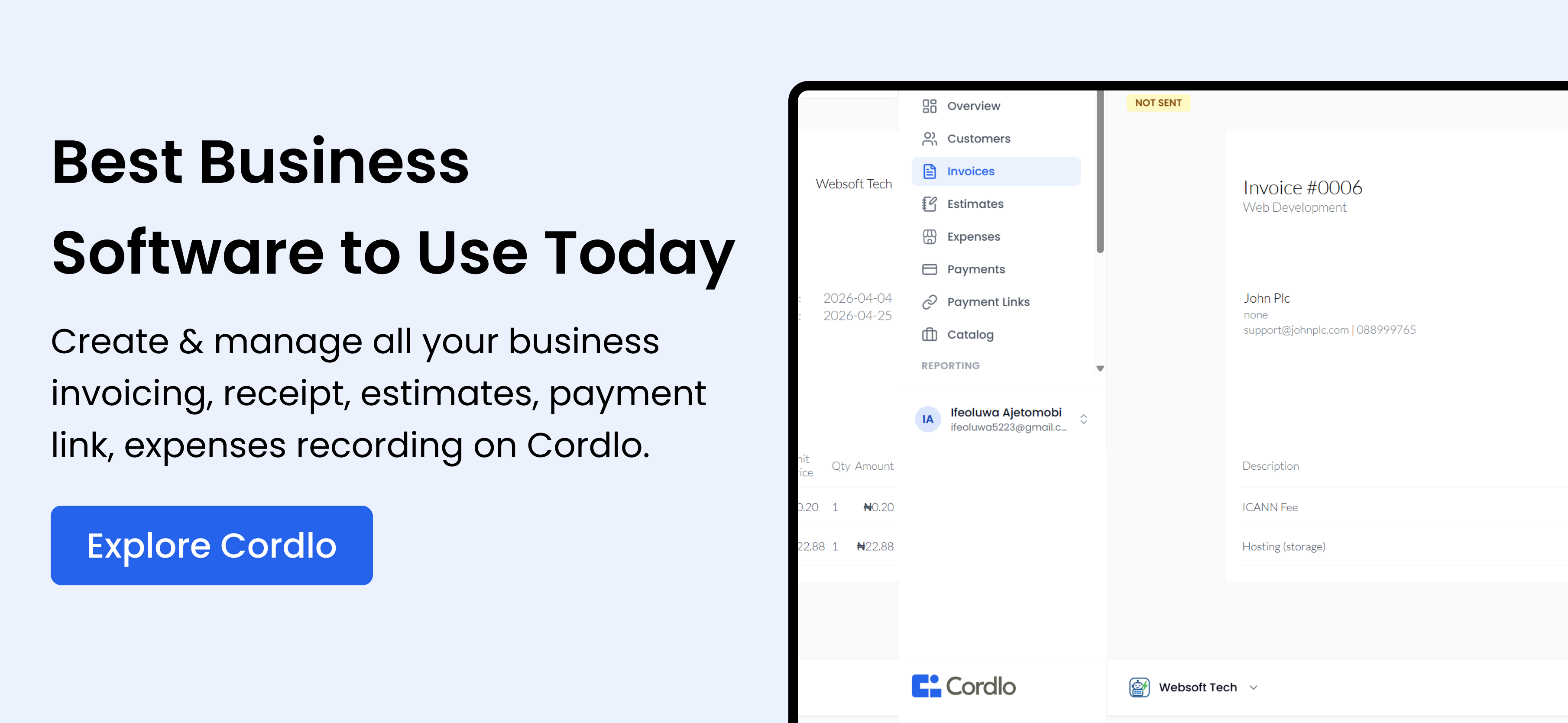
Cordlo is a simple invoicing and payments platform designed for African businesses. It helps you create professional invoices, track payments, and manage your finances efficiently.
Key features of Cordlo include:
- Professional Invoice Templates: Choose from a variety of customizable templates.
- Automated Payment Reminders: Send automatic reminders to clients to ensure timely payments.
- Multi-Currency Support: Bill clients in different currencies and track exchange rates.
- Payment Tracking: Monitor the status of your invoices and payments in real-time.
- Reporting and Analytics: Gain insights into your business performance with detailed reports.
Cordlo simplifies the invoicing process and helps you get paid faster. Sign up free and experience the benefits.
Cordlo vs. Alternatives
| Feature | Cordlo | Zoho Invoice | FreshBooks |
|---|---|---|---|
| Pricing | Free plan available, paid plans from $10/month | Free plan available, paid plans from $9/month | No free plan, paid plans from $15/month |
| Multi-Currency Support | Yes | Yes | Yes |
| Payment Gateways (Nigeria) | Paystack, Flutterwave | Paystack (via integration) | Paystack (via integration) |
| Automated Reminders | Yes | Yes | Yes |
| Ease of Use | Very easy | Moderate | Easy |
| Mobile App | Yes | Yes | Yes |
This table provides a quick comparison to help you evaluate the options. Consider your specific needs and budget when choosing an invoicing solution.
Additional Tips for Smooth Transactions
- Communicate Clearly: Establish clear communication channels with your clients (e.g., email, WhatsApp business).
- Set Expectations: Discuss payment terms and timelines upfront.
- Be Professional: Maintain a professional attitude in all your interactions.
- Build Relationships: Nurture long-term relationships with your clients.
By following these tips, you can build trust and ensure smooth transactions with your international clients.
Read also this article on How to write an invoice email that gets you paid faster. Also, learn about How to Create Invoice Template in Word
FAQ: Invoicing International Clients from Nigeria
What currency should I use when invoicing international clients?
It depends on your client’s preference and your business needs. USD is commonly used, but consider your expenses and currency stability.
Which payment gateways work best for international clients in Nigeria?
Paystack and Flutterwave are popular choices in Nigeria, offering multi-currency support and integration with local banks.
How do I handle currency conversion when receiving payments in foreign currency?
Open a domiciliary account to hold foreign currency and use currency conversion tools to track exchange rates. Factor in conversion fees charged by payment gateways and banks.
What are the tax implications of invoicing international clients in Nigeria?
Register with the FIRS, declare all foreign income in your tax returns, and comply with CBN regulations on repatriation of foreign currency earnings.
How can Cordlo help me with invoicing international clients?
Cordlo offers professional invoice templates, automated payment reminders, multi-currency support, and payment tracking to simplify the invoicing process.