Cordlo now supports the new Nigeria Tax law
Will be effective starting from 1 January 2026.
Personal Income Tax Calculator Nigeria
Our Personal Income Tax Calculator Nigeria helps employees, freelancers, and business owners accurately calculate PAYE (Pay As You Earn) tax based on the latest Nigerian tax laws.
This calculator is updated for 2026 and fully aligned with the Personal Income Tax Act (PITA) and current relief allowances.
Withholding Breakdown
Total tax paid
Understanding your effective tax burden is essential for financial planning. This includes all statutory deductions taken before your net pay.
Real tax rate
The real tax rate reflects the actual percentage of your total gross income that goes toward taxes and mandatory contributions.
Invoicing & Estimate Made Simple for Every Business
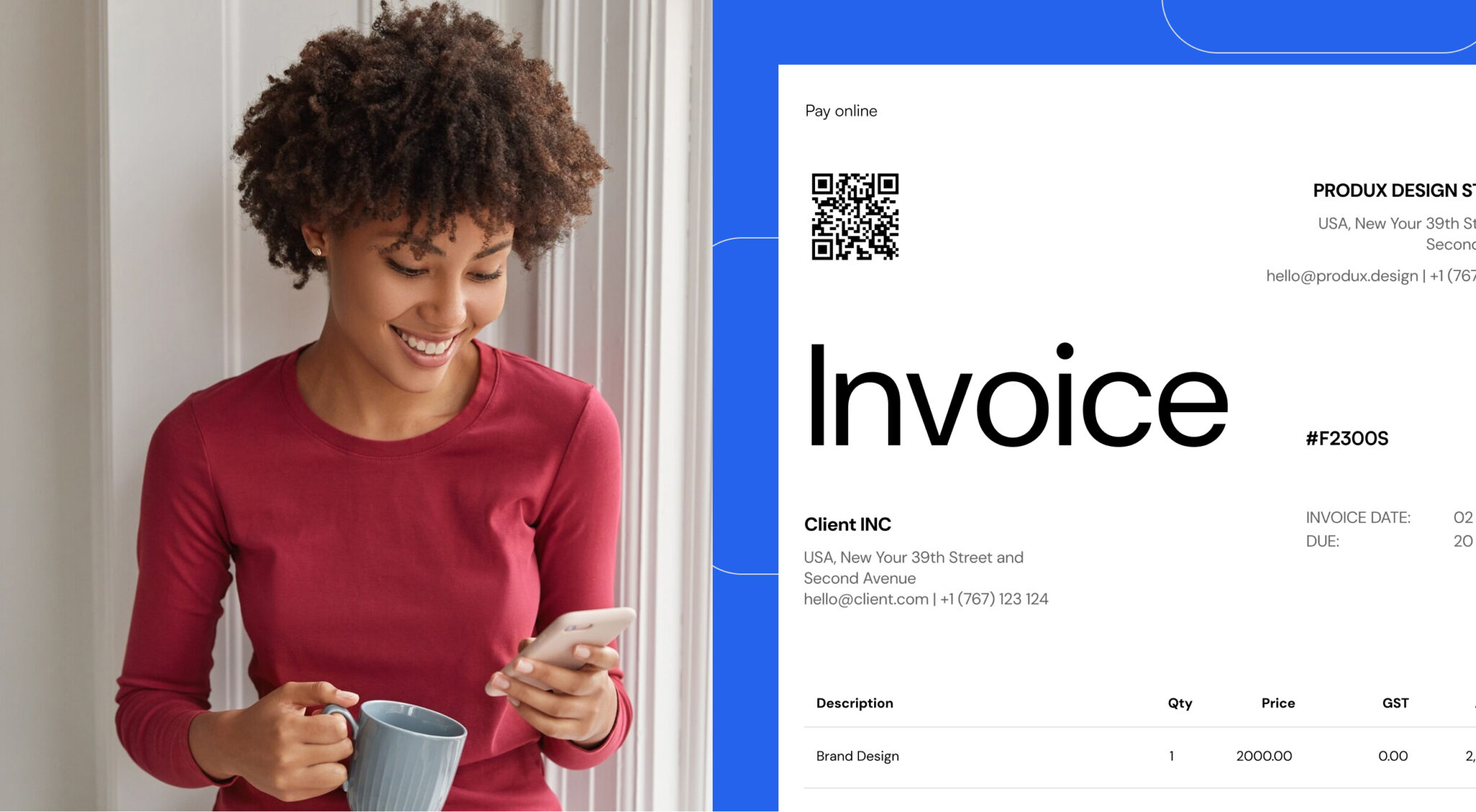
Create invoices & Estimate with built-in payment methods that help customers pay you faster. Perfect for everybody.
How We Learned to Explain PAYE Tax in Nigeria (And Why It Matters)
For a long time, we noticed a pattern.
People would check their payslips, look straight at the net salary, and move on.
The PAYE line was there — deducted quietly every month — but rarely questioned.
So we asked ourselves a simple question:
Do most people actually understand how PAYE tax in Nigeria is calculated?
The honest answer was no.
That’s why we decided to break it down — clearly, simply, and without the jargon.
What PAYE Really Means in Nigeria
PAYE stands for Pay As You Earn. It is the system used to collect personal income tax from employees in Nigeria.
But PAYE is often misunderstood.
You are not taxed on your full salary.
Before any tax is applied, Nigerian tax law allows specific reliefs and deductions that reduce your taxable income. Understanding this single point already changes how people see their payslips.
The Relief Built Into the System
Nigeria applies a Consolidated Relief Allowance (CRA) to every taxpayer.
Here’s how it works:
₦200,000 or 1% of gross income (whichever is higher)
Plus 20% of gross income
This amount is deducted first.
Only what remains after this relief is subject to PAYE tax.
This structure exists to ensure fairness — especially for low- and middle-income earners.
Why PAYE Is Not a Flat Tax
Another common misconception we often see is the belief that PAYE uses a single tax rate.
It doesn’t.
Nigeria uses a progressive tax system, which means income is taxed in layers. Each portion of your taxable income is taxed at a different rate.
These are the official PAYE tax bands in Nigeria:
First ₦300,000 — Tax Free
Next ₦300,000 — 7%
- Next ₦300,000 — 11%
Next ₦500,000 — 15%
Next ₦500,000 — 19%
Next ₦1.6 million — 21%
Above ₦3.2 million — 24%
Earning more doesn’t suddenly increase the tax rate on all your income.
Only the portion that falls into a higher band is taxed at that rate.
A Realistic Example
If someone earns ₦500,000 monthly, that’s ₦6,000,000 annually.
Here’s what happens:
Consolidated Relief Allowance is applied
Statutory deductions are removed
The remaining income becomes taxable
That taxable income is split across tax bands
Each portion is taxed accordingly
Total PAYE tax is calculated
Net pay is determined
It’s structured and predictable — but not easy to do manually.
Make Tax and Invoicing Easy with Cordlo
We noticed many freelancers and small businesses struggle with including taxes in their invoices and estimates. That’s why we built Cordlo.
With Cordlo you can:
Automatically calculate and include PAYE and other taxes in your invoices
Generate professional estimates and invoices in seconds
Keep your accounts transparent and compliant
Save hours every month on manual calculations
Sign up for Cordlo today and never worry about forgetting tax again. Your clients will see the right amounts, and you’ll stay in control of your finances.
Why Understanding PAYE Matters
When people understand their tax, they gain control.
It helps with:
Payslip verification
Salary planning
Financial transparency
Payroll accuracy
Compliance with Nigerian tax laws
For employees, employers, and HR teams, clarity builds trust.
Our Commitment
We believe tax education should be:
Simple
Transparent
Accessible
That’s why we continue to improve tools that help Nigerians understand exactly how much they earn, how much they pay, and why.
Because PAYE should never feel like a mystery.