You’ve sent an invoice, waited patiently, and still… nothing. Dealing with unpaid invoices is a frustrating reality for many Nigerian entrepreneurs and freelancers.
It’s a delicate balance. You need to get paid, but you also want to maintain good relationships with your clients. How do you follow up without sounding aggressive or pushy?
The key to following up on unpaid invoices politely is to be professional, persistent, and understanding. Start with a gentle reminder, clearly state the invoice details, and offer assistance. If necessary, gradually escalate your approach while remaining respectful and solution-oriented. Tools like Cordlo can automate reminders, saving you time and stress.
Why Gentle Follow-Up Matters in Nigeria
In Nigeria, relationships are often central to business. A harsh or demanding tone can damage rapport and lead to long-term consequences.
Maintaining a polite and professional approach, even when chasing payments, shows respect and builds trust. This is especially important in a culture where word-of-mouth referrals are common.
For example, Amaka, a web designer in Port Harcourt, relies on repeat business and referrals. She always phrases her invoice reminders as helpful check-ins rather than demands, preserving her client relationships.
Crafting the Perfect Follow-Up Email
Your follow-up email is your chance to get paid without burning bridges. Here’s how to write one that works:
- Subject Line: Keep it simple and clear. Examples: “Gentle Reminder: Invoice [Invoice Number] Due,” or “Checking In: Invoice [Invoice Number].”
- Greeting: Use a professional greeting like “Dear [Client Name],” or “Hello [Client Name].”
- Polite Opening: Start with a friendly and understanding tone. For example, “I hope this email finds you well,” or “I’m just checking in regarding invoice [Invoice Number].”
- State the Invoice Details: Clearly mention the invoice number, amount due, and due date. This avoids any confusion.
- Attach the Invoice: Always re-attach the invoice for easy reference.
- Offer Assistance: Show that you’re willing to help. For example, “Please let me know if you have any questions or require any clarification regarding the invoice.”
- Suggest Payment Options: Remind them of the available payment methods (bank transfer, online payment link, etc.). If you’re using Cordlo, you can simply include a payment link.
- Closing: End with a polite closing and thank them for their business. Examples: “Thank you for your prompt attention to this matter,” or “I appreciate your business.”
- Your Signature: Include your full name, business name, and contact information.
Sample Follow-Up Email Templates
Here are a few email templates you can adapt to your specific situation:
Template 1: Gentle Reminder
Subject: Gentle Reminder: Invoice [Invoice Number] Due
Dear [Client Name],
I hope this email finds you well.
I’m just checking in regarding invoice [Invoice Number] for [Amount] which was due on [Due Date]. I’ve attached a copy for your convenience.
Please let me know if you have any questions or require any clarification.
Thank you for your prompt attention to this matter.
Sincerely,
[Your Name]
Template 2: Checking In
Subject: Checking In: Invoice [Invoice Number]
Hello [Client Name],
I hope you’re having a productive week.
I’m following up on invoice [Invoice Number] for [Amount]. The due date was [Due Date].
We accept payments via bank transfer, Paystack, and Flutterwave. You can also use the payment link on the invoice.
Please let me know if there’s anything I can assist you with.
I appreciate your business.
Best regards,
[Your Name]
Template 3: Slightly More Firm (Use if previous reminders were ignored)
Subject: Invoice [Invoice Number] Overdue
Dear [Client Name],
I am writing to you again regarding invoice [Invoice Number] for [Amount], which is now overdue. The original due date was [Due Date].
We understand that things can sometimes be overlooked, but prompt payment is essential for us to continue providing you with the best possible service.
Please arrange for payment to be made within [Number] days. If you have already made the payment, please disregard this email.
If there are any issues preventing payment, please contact me immediately to discuss them.
Sincerely,
[Your Name]
Escalating Your Approach (When and How)
If gentle reminders don’t work, you may need to escalate your approach. However, always proceed with caution and maintain professionalism.
When to Escalate: If you’ve sent two or three reminders with no response or payment.
How to Escalate:
- Phone Call: A direct phone call can be more effective than email. Be polite but firm.
- Final Demand Letter: State that if payment is not received by a specific date, you will consider further action (e.g., involving a debt collection agency).
- Debt Collection Agency: A professional debt collector can pursue the debt on your behalf.
- Legal Action: As a last resort, you may consider legal action. This can be costly and time-consuming, so weigh the pros and cons carefully.
Nigerian Payment Realities and How to Navigate Them
Nigeria has its own unique payment challenges, such as:
- Payment Delays: Bureaucracy and slow payment processes are common, especially with larger organizations.
- Trust Issues: Some clients may be hesitant to pay upfront, particularly for new service providers.
- Currency Fluctuations: The value of the Naira can fluctuate, impacting the real value of your invoices.
Here’s how to navigate these challenges:
- Clear Payment Terms: Clearly state your payment terms in your contracts and invoices. Include due dates, payment methods, and late payment penalties.
- Payment Plans: Offer payment plans to make it easier for clients to pay in installments.
- Use Escrow Services: For large projects, consider using escrow services to protect both you and your client.
- Accept Multiple Payment Methods: Offer a variety of payment methods, including bank transfer, online payment gateways (Paystack, Flutterwave), and even cash (if appropriate).
The Power of Automation with Cordlo
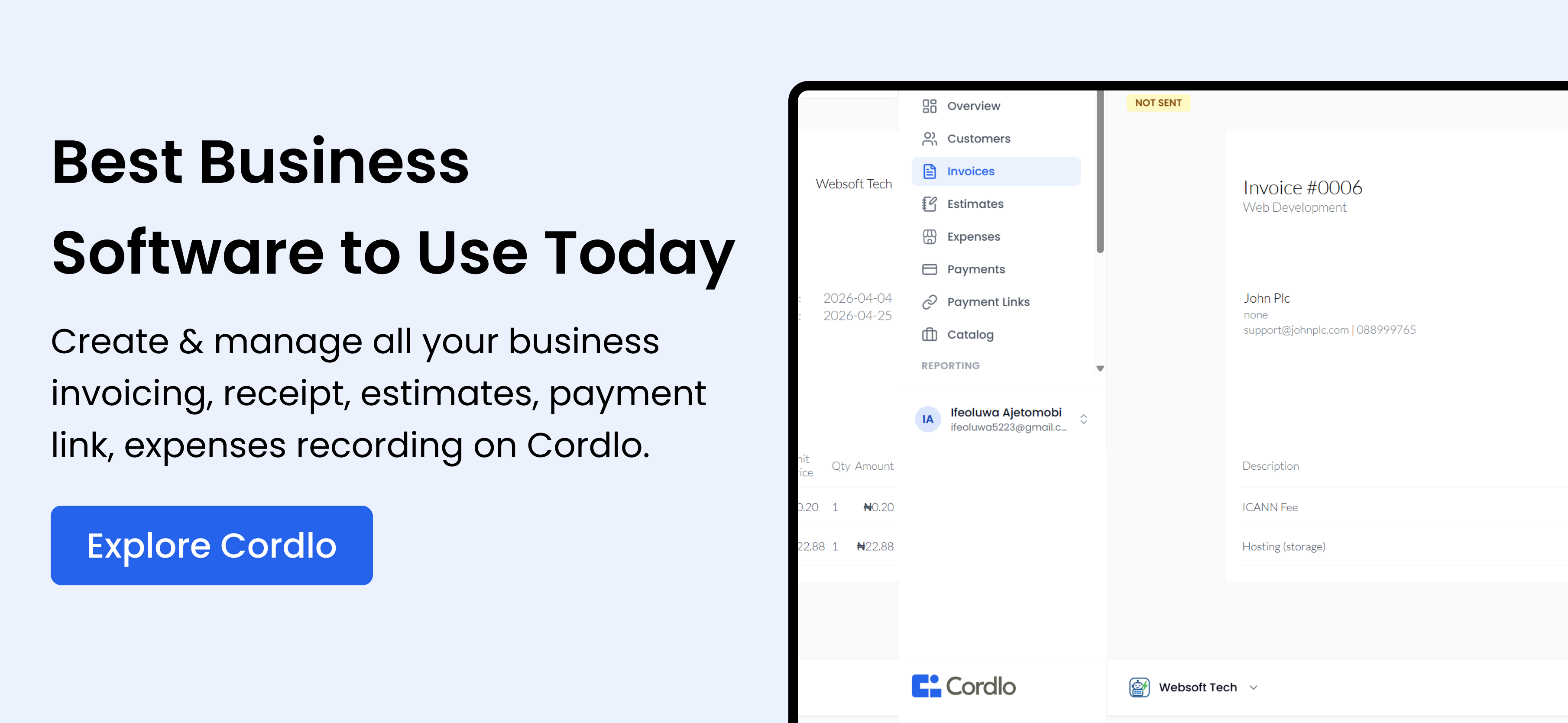
Cordlo can automate many aspects of invoice management, including:
- Automated Reminders: Set up automatic payment reminders to be sent at specific intervals.
- Invoice Tracking: Track the status of your invoices (sent, viewed, paid, overdue).
- Payment Links: Include payment links in your invoices to make it easy for clients to pay online.
- Reporting: Generate reports on your outstanding invoices and payment history.
Imagine Ngozi, a caterer in Lagos. She uses Cordlo to send automated reminders to her clients. This has significantly reduced the number of late payments she receives, freeing up her time to focus on her business.
Cordlo vs. Alternatives: Which is Right for You?
Here’s a comparison table to help you decide if Cordlo is the right invoicing solution for your business:
| Feature | Cordlo | Traditional Methods (e.g., Spreadsheets) | Other Invoicing Software |
|---|---|---|---|
| Automated Reminders | Yes | No | Yes (in some) |
| Invoice Tracking | Yes | Manual | Yes |
| Payment Links | Yes | No | Yes (in some) |
| Reporting | Yes | Manual | Yes |
| Ease of Use | Very Easy | Complex | Varies |
| Cost | Affordable | Low (but time-consuming) | Varies |
| Nigerian Payment Gateways | Yes (Paystack, Flutterwave) | No | Limited |
Real-Life Scenarios and Solutions
Let’s explore some common scenarios and how to handle them:
Scenario 1: A client claims they never received the invoice.
Solution: Resend the invoice immediately, and confirm the email address. Use Cordlo to track whether the invoice has been viewed.
Scenario 2: A client says they can’t pay until next month.
Solution: Offer a payment plan or negotiate a partial payment. Get the agreement in writing.
Scenario 3: A client is unresponsive to your emails and calls.
Solution: Send a final demand letter, and consider involving a debt collection agency.
Understanding the Legal Side of Invoicing in Nigeria
While being polite is crucial, understanding the legal aspects of invoicing is also important. Here’s a brief overview:
- CAC Registration: Ensure your business is registered with the Corporate Affairs Commission (CAC).
- FIRS Compliance: Comply with all tax regulations set by the Federal Inland Revenue Service (FIRS). FIRS Website
- Contracts: Have well-drafted contracts that clearly outline payment terms and dispute resolution mechanisms.
This information is for general guidance only and does not constitute legal advice. Consult with a legal professional for specific advice related to your situation.
The Importance of Clear Communication
Throughout the follow-up process, clear and open communication is key. Be transparent about your expectations and willing to listen to your client’s concerns.
Use simple language and avoid jargon. Be patient and understanding, but also firm in your resolve to get paid.
Remember, building strong relationships is essential for long-term success in Nigeria. By following up on unpaid invoices politely and professionally, you can protect your business while maintaining valuable client relationships.
Read how to write a professional invoice and invoice software for small businesses in Nigeria for more tips.
FAQ: Following Up on Unpaid Invoices in Nigeria
What is the best way to politely remind a client about an unpaid invoice?
Start with a gentle reminder email. Clearly state the invoice number, amount due, and due date, and offer assistance if they have any questions.
How many follow-up emails should I send before escalating the situation?
Send two to three gentle reminder emails over a period of a few weeks. If you still don’t receive a response, consider escalating to a phone call or a final demand letter.
What should I do if a client refuses to pay an invoice?
Send a formal demand letter outlining the debt and consequences of non-payment. If they still refuse, consider involving a debt collection agency or pursuing legal action as a last resort.
Can I charge interest on overdue invoices in Nigeria?
Yes, you can charge interest on overdue invoices, but this should be clearly stated in your contract and invoice terms. Make sure the interest rate complies with Nigerian law.
What are the common reasons for invoice payment delays in Nigeria?
Common reasons include bureaucratic processes, slow payment systems, and occasional trust issues. Clear communication and offering flexible payment options can help mitigate these delays.