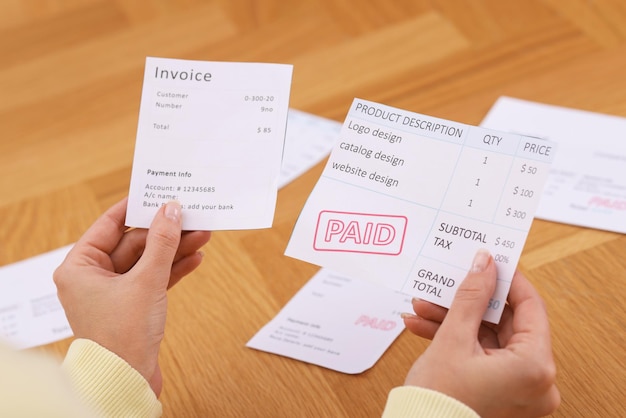
As a Nigerian business owner, you’re juggling a million things. You’re trying to grow, manage expenses, and keep your customers happy. Understanding the difference between an invoice and a receipt might seem small, but it’s crucial for getting paid accurately and staying compliant with FIRS regulations.
Many entrepreneurs, especially when starting out, confuse these two documents. Using the wrong one can lead to delayed payments, accounting errors, and even issues with tax reporting.
The key difference between an invoice and a receipt is their purpose. An invoice is a request for payment, issued before payment is made. A receipt, on the other hand, is proof of payment, issued after the transaction is complete. Think of it this way: you send an invoice to get paid, and you issue a receipt after you’ve been paid.
Why Understanding the Difference Matters in Nigeria
In Nigeria, clear financial record-keeping is essential. The FIRS (Federal Inland Revenue Service) requires businesses to maintain accurate records of all transactions. Confusing invoices and receipts can lead to discrepancies that trigger audits and potential penalties.
Also, many Nigerian clients expect professional documentation. Sending a receipt instead of an invoice (or vice versa) can damage your credibility and make you look unprofessional. Imagine Amara, a freelance graphic designer in Lagos, almost lost a major client because she initially sent a receipt instead of an invoice for a project proposal. Small details matter!
Using Cordlo helps you easily create and manage both invoices and receipts, ensuring accuracy and professionalism. This can save you time and prevent costly mistakes.
Key Differences: Invoice vs Receipt
Let’s break down the key distinctions in a table:
| Feature | Invoice | Receipt |
|---|---|---|
| Purpose | Request for payment | Proof of payment |
| Timing | Issued before payment | Issued after payment |
| Content | Includes items/services, quantity, price, payment terms, due date | Includes items/services, amount paid, payment method, date of payment |
| Recipient | Sent to the customer/client | Given to the customer/client |
| Legal Significance | Creates an obligation to pay | Confirms the obligation has been fulfilled |
Think of it like this: an invoice is like a bill, while a receipt is like a confirmation that the bill has been paid.
What Information Should Each Document Contain?
Both invoices and receipts need specific information to be considered valid records.
Invoice Essentials:
- Your Business Name and Contact Information: Include your registered business name (as it appears on your CAC registration), address, phone number, and email.
- Client’s Name and Contact Information: Make sure you have the correct details for your client.
- Invoice Number: Use a unique sequential number for each invoice to help with tracking.
- Invoice Date: The date the invoice was issued.
- Description of Goods or Services: Clearly list each item or service provided, including the quantity and price.
- Total Amount Due: The total amount the client owes.
- Payment Terms: Specify how the client can pay you (e.g., bank transfer, online payment via Paystack or Flutterwave) and the payment due date.
Receipt Essentials:
- Your Business Name and Contact Information: Same as on the invoice.
- Client’s Name: Who paid you.
- Receipt Number: A unique number for tracking.
- Date of Payment: The date the payment was received.
- Description of Goods or Services: A brief description of what was paid for.
- Amount Paid: The amount the client paid.
- Payment Method: How the client paid (e.g., cash, bank transfer, card).
Invoice vs Receipt: Example Scenarios in Nigeria
Let’s look at some real-life scenarios to solidify your understanding.
Scenario 1: A Bakery Supplies an Event
Mama Risikat owns a small bakery in Ibadan. She gets an order to supply 200 cupcakes for a wedding. Before she starts baking, she sends the client an invoice detailing the cost per cupcake, the total amount, and her GTBank account details for payment.
Once the client pays and Mama Risikat confirms the payment, she issues a receipt as proof of payment. Both documents are crucial for her accounting and for the client’s records.
Scenario 2: A Freelance Writer Gets Hired
Chinedu is a freelance writer in Abuja. He agrees to write a series of blog posts for a tech startup. Before he starts writing, he sends them an invoice outlining his rate per article and the total cost for the project.
After the startup pays him (usually via bank transfer), Chinedu sends them a receipt confirming the payment. He uses Cordlo to easily generate professional invoices and receipts.
Common Mistakes to Avoid
Here are some common mistakes Nigerian businesses make with invoices and receipts:
- Using the wrong document: Sending a receipt when an invoice is needed, or vice versa.
- Missing information: Forgetting to include essential details like the invoice/receipt number, date, or payment terms.
- Inconsistent numbering: Not using a consistent numbering system for invoices and receipts, making it hard to track payments.
- Poor record-keeping: Not storing invoices and receipts properly, leading to lost documents and accounting errors.
How Cordlo Simplifies Invoice and Receipt Management
Cordlo is designed to help Nigerian businesses streamline their invoicing and receipting processes. Here’s how:
- Easy Invoice and Receipt Generation: Create professional-looking invoices and receipts in minutes with customizable templates.
- Automated Numbering: Cordlo automatically assigns unique numbers to each invoice and receipt.
- Payment Tracking: Track the status of your invoices and see which ones have been paid.
- Secure Storage: Store all your invoices and receipts securely in the cloud.
- Integration with Payment Gateways: Connect with popular payment gateways like Paystack and Flutterwave to accept online payments.
Cordlo vs. Alternatives
Let’s see how Cordlo stacks up against other invoicing and receipting solutions:
| Feature | Cordlo | Manual Spreadsheets | Generic Invoice Templates |
|---|---|---|---|
| Ease of Use | Very easy, intuitive interface | Requires manual data entry and formatting | Easier than spreadsheets, but limited customization |
| Automation | Automated numbering, payment tracking | No automation | Limited automation |
| Professionalism | Professional, customizable templates | Can look unprofessional | Better than spreadsheets, but may lack polish |
| Cost | Affordable plans for small businesses | Free (but time-consuming) | Often free, but may have hidden costs |
| Integration | Integrates with payment gateways | No integration | Limited integration |
As you can see, Cordlo offers a balance of ease of use, automation, and professionalism that’s ideal for Nigerian businesses.
The Legal Side of Invoices and Receipts in Nigeria
Invoices and receipts are important for tax compliance in Nigeria. The FIRS requires businesses to keep accurate records of all income and expenses. These documents serve as evidence of transactions for tax purposes.
Make sure your invoices and receipts comply with FIRS guidelines. This includes including your Tax Identification Number (TIN) on all documents and keeping records for at least six years, as stipulated by regulations.
For more information, consult the FIRS website: https://www.firs.gov.ng
Conclusion
Understanding the difference between an invoice and a receipt is essential for running a successful business in Nigeria. Using the right document, including all necessary information, and keeping accurate records can help you get paid on time, avoid accounting errors, and stay compliant with FIRS regulations.
Cordlo simplifies the entire process, allowing you to focus on growing your business. Sign up free today and experience the difference!
For more guides on managing your business finances, check out our blog. You might find these articles helpful: How to Write a Professional Invoice and Expense Tracking Methods for Small Businesses.
Frequently Asked Questions
What is the difference between an invoice and a proforma invoice?
An invoice is a request for payment, while a proforma invoice is an estimate or quotation provided to a client before the work is done. A proforma invoice is not a demand for payment.
Do I need to issue a receipt for every payment I receive?
Yes, you should issue a receipt for every payment you receive. This serves as proof of payment for your client and helps you maintain accurate records.
What happens if I lose an invoice or receipt?
If you lose an invoice or receipt, try to obtain a copy from the other party involved in the transaction. If that’s not possible, recreate the document with as much detail as you can remember and keep a record of why the original is missing.
Can I use WhatsApp to send invoices and receipts?
Yes, you can use WhatsApp to send invoices and receipts, especially with a tool like Cordlo that integrates with WhatsApp Business. This makes it easy to share documents with clients quickly and efficiently.
Is it okay to send an invoice as a PDF attachment?
Yes, sending an invoice as a PDF attachment is a common and professional practice. PDF files are easy to view and print, and they ensure that the formatting of the invoice remains consistent.