
You need to send a quotation to a potential client, but the thought of designing a professional-looking document from scratch feels overwhelming. Spreadsheets are messy, and design software is complicated.
You’re losing valuable time that could be spent on actually growing your business.
Cordlo offers estimate and quotation software specifically designed for Nigerian businesses. It allows you to create, send, and manage professional-looking estimates and quotations with ease, ensuring clarity and a higher chance of securing the job. Most Nigerian businesses use a simple invoice template to create quotes, but Cordlo provides a better experience.
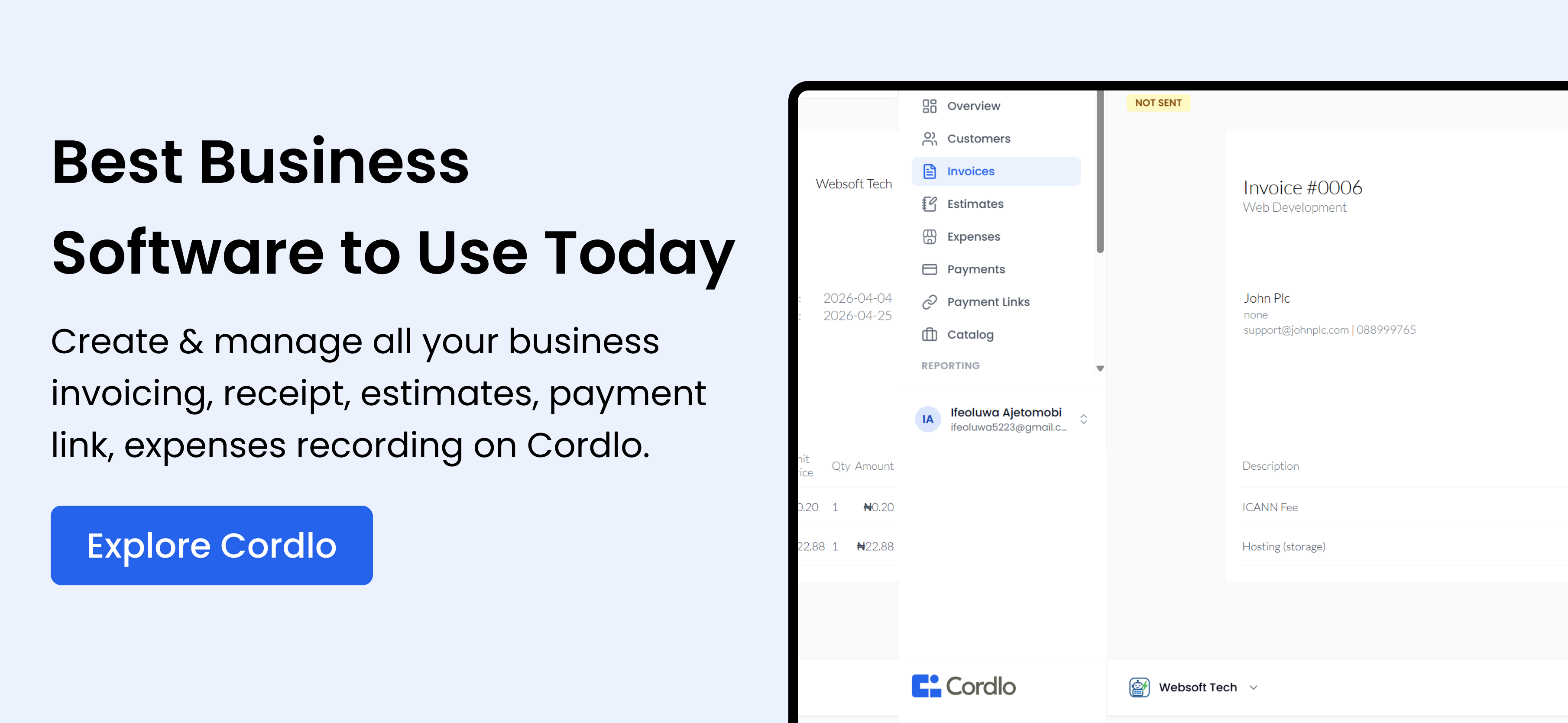
What does Cordlo’s estimate and quotation feature do?
Cordlo’s estimate and quotation feature empowers you to quickly generate detailed and professional documents. You can customize them with your logo, itemized services, pricing, and payment terms.
It also allows you to track the status of each quotation, from sent to accepted, helping you stay organized and follow up effectively. You can easily convert accepted quotations into invoices with a single click.
Are you a Nigerian SME looking for free estimate and quotation software? Cordlo lets you easily create, send, and manage professional-looking documents. This helps you win more clients and get paid faster.
How to create an estimate or quotation in Cordlo: A step-by-step guide
Creating estimates and quotations in Cordlo is straightforward. Here’s how:
- Sign in to your Cordlo account: If you don’t have one, sign up for free on Cordlo. No credit card is required.
- Navigate to the ‘Estimates/Quotations’ section: Find it on the left-hand menu.
- Click ‘Create New’: This will open a new form where you can fill in the details.
- Add client information: Enter the client’s name, address, and contact details.
- Add items or services: Clearly list each item or service you’re offering, along with its description, quantity, and price.
- Customize the design: Upload your logo and choose a color scheme to match your brand.
- Set payment terms: Specify the payment deadline and any other relevant conditions.
- Preview and send: Review the estimate/quotation to ensure everything is accurate, then send it directly to your client via email.
Cordlo vs. Alternatives: Which is best for your business?
Let’s see how Cordlo stacks up against other popular options for Nigerian businesses:
| Feature | Cordlo | Spreadsheets | Generic Invoice Templates |
|---|---|---|---|
| Professional Design | Yes, customizable | No | Limited |
| Ease of Use | Very easy | Difficult | Moderate |
| Tracking | Yes, full tracking | No | No |
| Integration with Invoicing | Seamless | Manual | Manual |
| Cost | Free plan available | Potentially free, but time-consuming | Potentially free, but basic |
| Nigerian Focus | Yes | No | No |
As you can see, Cordlo offers a more professional and efficient solution compared to spreadsheets and generic invoice templates, especially for Nigerian businesses.
Why Estimates and Quotations are Crucial for Nigerian SMEs
In Nigeria’s dynamic business environment, sending professional estimates and quotations is more than just good practice. It’s essential for building trust and securing deals.
Imagine you’re a carpenter in Lagos, like Musa. He uses WhatsApp to communicate with clients. Sending a properly formatted quotation, instead of just a price in a message, shows professionalism. It includes clear pricing, payment terms, and builds trust.
Or consider Fatima, who runs a catering business in Abuja. She needs to provide detailed quotations for events. A well-structured quotation from Cordlo helps her stand out from competitors who might just send a list of prices.
These scenarios highlight the importance of clear, professional documentation in securing business and managing customer expectations.
Key elements of a winning estimate or quotation
A winning estimate or quotation should include these key elements:
- Clear and Concise Description: Provide a detailed breakdown of the services or products offered.
- Accurate Pricing: Ensure your prices are competitive and clearly stated, including any applicable taxes (like VAT).
- Payment Terms: Specify your payment terms, including deadlines and accepted payment methods (bank transfer, Paystack, Flutterwave).
- Company Information: Include your company name, address, contact details, and CAC registration number (if applicable).
- Professional Design: Use a clean and professional design that reflects your brand.
- Validity Period: State how long the quotation is valid for, especially important with fluctuating exchange rates.
How Cordlo helps you manage your estimates and quotations effectively
Cordlo is designed to streamline your estimate and quotation process. Here’s how:
- Centralized Management: Keep all your estimates and quotations in one place, easily accessible and searchable.
- Automated Tracking: Track the status of each quotation, from sent to accepted to invoiced.
- Customizable Templates: Use customizable templates to create professional-looking documents quickly.
- Easy Conversion to Invoices: Convert accepted quotations into invoices with a single click, saving you time and effort.
- Reporting and Analytics: Gain insights into your sales pipeline and track your quotation success rate.
Integrating Cordlo with other tools for maximum efficiency
To maximize efficiency, consider integrating Cordlo with other tools you use in your business:
- Accounting Software: Integrate with accounting software to automate your bookkeeping and financial reporting.
- Payment Gateways: Connect with payment gateways like Paystack and Flutterwave to accept online payments directly from your quotations and invoices.
- CRM Systems: Integrate with CRM systems to manage your customer relationships and track your sales pipeline.
While direct integrations may vary, using tools together can greatly improve your workflow.
Common Mistakes to Avoid When Creating Estimates and Quotations
Avoid these common mistakes when creating estimates and quotations:
- Vague Descriptions: Provide clear and detailed descriptions of the services or products offered.
- Hidden Costs: Be transparent about all costs, including taxes and fees.
- Incorrect Pricing: Double-check your pricing to ensure accuracy.
- Missing Payment Terms: Clearly specify your payment terms, including deadlines and accepted payment methods.
- Poor Design: Use a professional design that reflects your brand.
By avoiding these mistakes, you can increase your chances of securing the job and building trust with your clients. Read this guide on how to avoid invoice errors.
Real-World Examples of Effective Estimates and Quotations in Nigeria
Let’s look at some real-world examples of how effective estimates and quotations can make a difference:
- A construction company in Lagos: Uses detailed quotations to win large contracts, outlining every stage of the project and associated costs.
- A fashion designer in Kano: Provides clear estimates for custom clothing orders, specifying fabric costs, design fees, and tailoring charges.
- A web developer in Port Harcourt: Sends professional quotations for website design projects, including hosting fees, domain registration costs, and maintenance charges.
These examples demonstrate the importance of clear, accurate, and professional documentation in various industries across Nigeria.
How to handle negotiations and revisions of your estimates and quotations
Negotiation is a normal part of the quotation process. Be prepared to discuss and potentially revise your estimates. Here’s how:
- Be Prepared to Justify Your Pricing: Know your costs and be able to explain how you arrived at your prices.
- Be Flexible: Be willing to negotiate on certain aspects of the quotation, such as payment terms or delivery dates.
- Get it in Writing: Always document any revisions in writing to avoid misunderstandings later on.
- Maintain a Professional Tone: Even during negotiations, maintain a professional and respectful tone.
The Future of Estimates and Quotations for Nigerian SMEs
The future of estimates and quotations for Nigerian SMEs is likely to be increasingly digital and automated.
Expect to see greater adoption of cloud-based software like Cordlo, mobile apps for creating and sending quotations on the go, and integration with other business tools. Also, expect to see increased use of electronic signatures to speed up the approval process.
SMEs who embrace these technologies will be better positioned to compete and succeed in the long run. Read this article on the future of business in Nigeria.
Frequently Asked Questions (FAQs)
What is the difference between an estimate and a quotation?
An estimate is an approximate cost, while a quotation is a fixed price offer. A quotation is usually binding, while an estimate is subject to change.
Is it legally binding?
A quotation becomes legally binding once the client accepts it. Make sure your terms and conditions are clearly stated to avoid disputes.
How long should a quotation be valid for?
The validity period depends on the industry and the volatility of prices. Generally, 30 days is a reasonable timeframe, but shorter periods may be necessary in times of high inflation or exchange rate fluctuations.
What payment methods should I accept?
Accept a variety of payment methods to cater to your clients’ preferences. Common options in Nigeria include bank transfers, cash, Paystack, and Flutterwave.
How do I handle VAT on my estimates and quotations?
If you are registered for VAT, you must include VAT in your prices and clearly state the VAT amount on your estimates and quotations. Consult with a tax professional or visit the FIRS website for more information. Also, see this guide on generating tax invoices.
What if the client doesn’t pay after accepting the quotation?
If a client fails to pay after accepting a quotation, you may need to take legal action to recover the debt. It’s always best to have a written agreement and to seek legal advice if necessary.